
The pre-sales volume of Godrej Properties (GPL) for third quarter of the financial year 2025 (Q3FY25) declined 6 per cent year-on-year (Y-o-Y) -- down 21 per cent quarter-on-quarter (Q-o-Q) -- to 4.1 million square feet (msf), resulting in a pre-sales value of Rs 5,450 crore, down 5 per cent each Y-o-Y and Q-o-Q. About 77 per cent came from newly launched projects. For 9MFY25, pre-sales were up 48 per cent Y-o-Y to Rs 19,300 crore.

Whether nominal or real, India's investment rate needs to increase by 3 to 4 percentage points of GDP to support 8 per cent real growth, recommends Nikhil Gupta.

Shares of healthcare services major Max Healthcare Institute have gained over 23 per cent since the start of this month and the stock crossed the Rs 1 trillion mark on September 24. On September 25, it closed 989.85 apiece at the NSE. The gains were cornered on the back of a strong outlook for the sector and aggressive expansion plans for the chain led by acquisitions and organic growth.

In the e2W category, which accounts for more than 60 per cent of total EV sales, volumes fell 15 per cent to 118,944 units in November, compared to 139,787 units in the previous month

India Inc continued to grapple with muted revenue growth in the September 2024 quarter (Q2FY25) and witnessed a decline in margins and profits. The headwinds were especially severe for non-financial companies, while banking, financial services, and insurance (BFSI) firms significantly outpaced the rest of the corporate sector. The total profit of 1,353 listed companies that have released their Q2FY25 results thus far dropped by 0.6 per cent year-on-year (Y-o-Y) - the first cumulative earnings decline in eight quarters.

During the September quarter (Q2FY25), Hindustan Zinc's (HZL's) revenue was reported at Rs 8,300 crore (up 22 per cent year-on-year or Y-o-Y, and 2 per cent quarter-on-quarter or Q-o-Q), marginally above consensus. Operating profit stood at Rs 4,100 crore (up 31 per cent Y-o-Y and 5 per cent Q-o-Q), also a small beat. The operating profit margin was 50 per cent, up from 48.5 per cent in Q1FY25.

Fitch Ratings on Tuesday said the FY25 Budget demonstrated the government's ongoing commitment to reducing fiscal deficit and ensured policy continuity during the NDA government's new term. Finance Minister Nirmala Sitharaman on Tuesday presented the first Budget of the Modi 3.0 government in which she revised the deficit target for current fiscal lower to 4.9 per cent of the GDP, from 5.1 per cent projected in the interim Budget.

State-owned Oil and Natural Gas Corporation (ONGC) expects a USD 10.3 billion revenue boost from increased oil and gas production, achieved through a partnership with UK's BP in the Mumbai High field.

Reserve Bank on Thursday retained the growth and inflation projection at 7.2 per cent and 4.5 per cent respectively for the current fiscal amid expectations of a normal monsoon. In its last bi-monthly monetary policy review in June, RBI had projected real GDP growth and retail inflation at the same.

Power utilities may report moderate growth in earnings for Q3FY25. Generation is up 3 per cent year-on-year (Y-o-Y) in Q3 on lower cooling demand and high base, to 429 billion units (BU). Peak demand was steady at 224 Gw in Q3FY25, a 10 per cent decline from the record highs of 250 Gw in May 2024.

Union Finance Minister Nirmala Sitharaman on Monday said people are finding current interest rates "very stressful" and urged banks to make them affordable. Speaking at an event organised by State Bank of India, the finance minister said that at present, India requires industry to ramp up and invest in new facilities, and added that lowering lending rates can help achieve the "Viksit Bharat" aspiration.

Coal India looks set to achieve its 2024-25 (FY25) production targets. If it can achieve its aim of ramping up Fuel Supply Agreement (FSA) and e-auction volumes, along with cost-saving, evacuation and infrastructure-improvement projects, the company could maintain its momentum as a critical infrastructure and core industry performer. Analysts estimate e-auction volumes of 108 million tonnes (MT) in FY25 and 120 MT for FY26, which is encouraging given the premium of e-auction prices which are consistently over 50 per cent higher than FSA.

In the June quarter of 2024-2025, smartphone exports hit $2 billion, well ahead of non-industrial diamond exports, which stood at $1.44 billion.

From its highs over the past month, the stock of Procter & Gamble Hygiene and Healthcare fell 7 per cent before recovering this week. The stock has been an underperformer over the last year and has traded flat over this period.
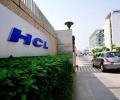
IT services major HCL Technologies (HCLTech) on Monday reported a 10.51 per cent increase in consolidated net profit to Rs 4,235 crore in July-September quarter of FY25, as the company raised the lower band of its growth guidance on the back of better-than-expected performance. The Noida-headquartered firm had posted a net profit of Rs 3,832 crore in the year-ago period. HCLTech increased the lower band of its revenue growth guidance to 3.5-5 per cent year-on-year in constant currency, against a guidance of 3-5 per cent in the first quarter.

The filing of Swiggy's DRHP has led to direct comparisons with Zomato, which is a direct competitor in food delivery and the fast-growing quick-commerce segment where Blinkit (owned by Zomato) faces off against Instamart (and Zepto). In Q-commerce, Flipkart, Amazon, Reliance and Big Basket are all entering the space. All of them have deep pockets, hence competitive intensity will rise going forward.

Hero MotoCorp, a major player in the two-wheeler market, has seen a 9 per cent rise in its stock since the beginning of the month. This increase, driven by the largest motorcycle company by volume, is attributed to expectations of a revival in rural sales due to normal monsoons, government measures to boost consumption, recent market share gains, and a large valuation discount compared to peers. In the near term, the company's volume performance and growth trajectory, particularly in rural markets and entry-level segments, are expected to be key drivers.

NMDC, the country's largest iron-ore miner, posted a consolidated revenue in the January-March quarter of FY24. This was in line with estimates at Rs 6,500 crore, which was up 11 per cent year-on-year (Y-o-Y), and a 20 per cent quarter-on-quarter (Q-o-Q) rise on the back of realisations. Iron-ore production was 13.3 million tonnes (down 6 per cent and up 8 per cent Q-o-Q), while the sales stood at 12.5 MT (up 1 per cent Y-o-Y and up 10 per cent Q-o-Q).

The upstream oil and gas (O&G) sector has delivered a stellar performance in the stock market in the recent past. The O&G sector is dominated by PSUs and despite the imposition of a windfall tax, profitability has been impressive. Oil India Limited (OIL) is particularly favoured by investors.

From its lows over the past month, the stock of footwear major Campus Activewear gained 13 per cent to Rs 280.4 a share. The gains came on the back of better than expected operating profit margins in Q4, reduction of debt and expectations of market share improvement. The company expects volume growth, which has thus far missed expectations, to recover going ahead on the back of multiple triggers.

Continuing on the fiscally prudent path, the Modi government in the interim Budget refrained from announcing populist measures, which will help it trim the fiscal deficit to 5.1 per cent of the GDP next fiscal and 4.5 per cent in FY26.

The stock of United Spirits, the country's largest liquor company by market capitalisation (mcap), has gained 11 per cent over the past week on double-digit growth guidance, rising premiumisation trend, operationally in-line performance in the March (Q4FY24) quarter and a rally in consumer stocks. The revenue growth of the company came in at 7 per cent year-on-year (Y-o-Y) mirroring the growth of the prestige and above (P&A) segment. This segment comprising premium brands accounts for 88 per cent of the revenues.

Automotive (auto) major Mahindra & Mahindra (M&M), which is readying to launch nine sport utility vehicles (internal combustion engine/ICE), seven Born Electric Vehicles (BEVs), and seven light commercial vehicles by 2030, has outlined an investment of Rs 27,000 crore in its auto business between 2024-25 (FY25) and 2026-27 (FY27). Over the next three years, the company will deploy Rs 37,000 crore, including its auto business, farm business (Rs 5,000 crore), and service business (Rs 5,000 crore).

A weaker-than-expected sales performance, concerns about higher competitive intensity in the current year, and earning cuts by some brokerages have weighed on the stock of the country's largest paint maker, Asian Paints. While the Q3 volume show was slightly below expectations, the company's operational and bottom line beat estimates, benefiting from the falling raw material costs. The stock ended the day with a decline of over 2 per cent at Rs 3,175 apiece.

Dixon Technologies' January-March quarter (Q4) results came in well below expectations, but the potential for signing up a new mobile client, and plans for backward integration into display manufacturing kept investors happy. Dixon's Q4FY24 revenue grew 52 per cent year-on-year (Y-o-Y) to Rs 4,660 crore, below Street consensus, due to weakness in consumer electronics (Rs 890 crore) and home appliances (Rs 294 crore) segments.

Strong performance by its US subsidiary Novelis and better returns in the copper business helped Hindalco Industries post consolidated revenue growth of 2 per cent quarter-on-quarter (Q-o-Q) to Rs 54,100 crore in the July-September quarter of 2023-23 (Q2FY24). Novelis' Flat Rolled Products (FRP) volumes grew 6 per cent Q-o-Q to 933,000 tonnes (down 5.2 per cent Y-o-Y) on better North American and European volumes. The consolidated earnings before interest, taxes, depreciation, and amortization (EBITDA) declined 2 per cent Q-o-Q to Rs 5,610 crore despite lower input costs in India and better Novelis performance.

Despite the robust growth in this country, Apple's India share in its overall global sales remained modest -- constituting 1.5 per cent of its overall turnover of $389 billion in FY23.

The power sector is always strongly correlated to economic activity and is receiving its share of investor attention as India's post-Covid-19 recovery continues. India's leading integrated power producer, the public sector undertaking (PSU) NTPC controls around 25 per cent of India's power capacity. It continues to increase installed capacity, in thermal as well as renewables (solar, wind, green hydrogen) and hydropower and pumped hydro, and also has backward integration into coal mining, and explored nuclear.

Bharat Electronics (BEL) reported excellent results for the January-March quarter (Q4) of FY24, which were driven by decent EBITDA margins and higher PAT as well as good revenue growth. Order inflows were also good. BEL is a major beneficiary of the policy of defence indigenisation.

Analysts and economists have hailed the fiscal projections in the interim Budget, saying the lower fiscal deficit forecast shows that the government, even in an election year, is serious about fiscal consolidation and that the numbers look achievable. According to Devendra Kumar Pant, the chief economist at India Ratings, the two broad themes of the interim Budget are fiscal consolidation and stepping up focus on agriculture/rural to course correct, to some extent, the differential benefits of the ongoing economic growth that's tilted in favour of upper-income bracket/urban households. The projected fiscal deficit numbers for FY24 and FY25 suggest that the government is serious about achieving the fiscal consolidation path of 4.5 per cent fiscal deficit by FY26, and given the nominal GDP growth assumption and revenue buoyancy, the target appears plausible, Pant said in a note.

Berger Paints, the country's second-largest decorative paint maker, continued to outperform its peers and gain market share in the 2023-24 (FY24) October-December quarter (third quarter, or Q3). The company posted a consolidated revenue growth of 7 per cent compared to the year-ago quarter, surpassing Asian Paints (5.4 per cent) and Kansai Nerolac Paints (5.7 per cent).

'Which is growing fast and where we are very strongly positioned.'

Hotel companies, which have experienced substantial share price gains in the past six months, are not only expected to post robust revenue growth in the seasonally weak July-September quarter (second quarter, or Q2) of 2023-24 (FY24), with the trend continuing in the second half (H2) of FY24, but according to some analysts, they will also benefit from a structural uptrend in progress. To begin with, larger players in the listed hotel sector are expected to report strong growth in Q2 compared to the year-ago quarter. Led by higher demand from the business segment, the sector is expected to achieve a growth rate of 15-30 per cent.

Apple is hoping to assemble in India 25 per cent of all iPhones produced globally to reduce its heavy dependence on China.

In the July to September quarter of 2023-24 (Q2FY24), Voltas' revenues grew by 29.7 per cent year-on-year (Y-o-Y), but the adjusted net profit was down by 63 per cent Y-o-Y. The revenues hit Rs 2,290 crore, led by growth in the Unitary Cooling Products segment (up 15.4 per cent Y-o-Y, and in the EMP (Electromechanical project) business (up 66.8 per cent Y-o-Y). The UCP revenue rose to Rs 1,200 crore in Q2FY24, driven by volume growth despite weak consumer spending - the three-year annual growth is 18 per cent.

Engineering giant Larsen & Toubro (L&T) is looking to divest its exposure to road and power concessions and incubate digital and e-commerce businesses as part of its new five-year plan ending 2025-26 (FY26). The base year for the plan is 2020-21 (FY21). The blueprint, called Lakshya 2026, is intended to help the company exit sub-scale businesses, concentrate on high-technology (tech) manufacturing, construction and green energy projects, and increase its share from information technology (IT) and digital services. The lending operations of the financial services business, meanwhile, will be reorganised, with focus on retail lending.

Bengaluru-based Prestige Estates Projects recently said it aims to double its annual residential sales bookings to Rs 25,000 crore by FY26 from its current markets and others such as Mumbai, Pune and National Capital Region (NCR). The company's chairman and managing director Irfan Razaq tells Raghavendra Kamath about his plans to achieve the target and outlook for the real estate market.

Following are comments from economists at leading financial institutions, banks and rating agencies on the interim Budget:

In spite of a massive jump in the number of the uber rich and rich becoming richer, their contributions to charity continued to decline during the COVID-19 pandemic when a whopping 200 million-plus were forced into poverty, says a report. While CSR (corporate social responsibility) spends have increased from 12 per cent in FY15 (two years into mandatory CSR spends) to 23 per cent in FY21, charity by the uber rich slipped from 18 per cent of the total funding in FY15 to a paltry 11 per cent in FY21, says global consultancy Bain & Company and charity-focused domestic consultancy Dasra in their India Philanthropy Report 2022. The report said that donation from private foreign companies has contracted from around 26 per cent in overall private giving in FY15 to around 15 per cent in FY21.

'Now that we are a pure-play India business, many investors are open to investing.'
